
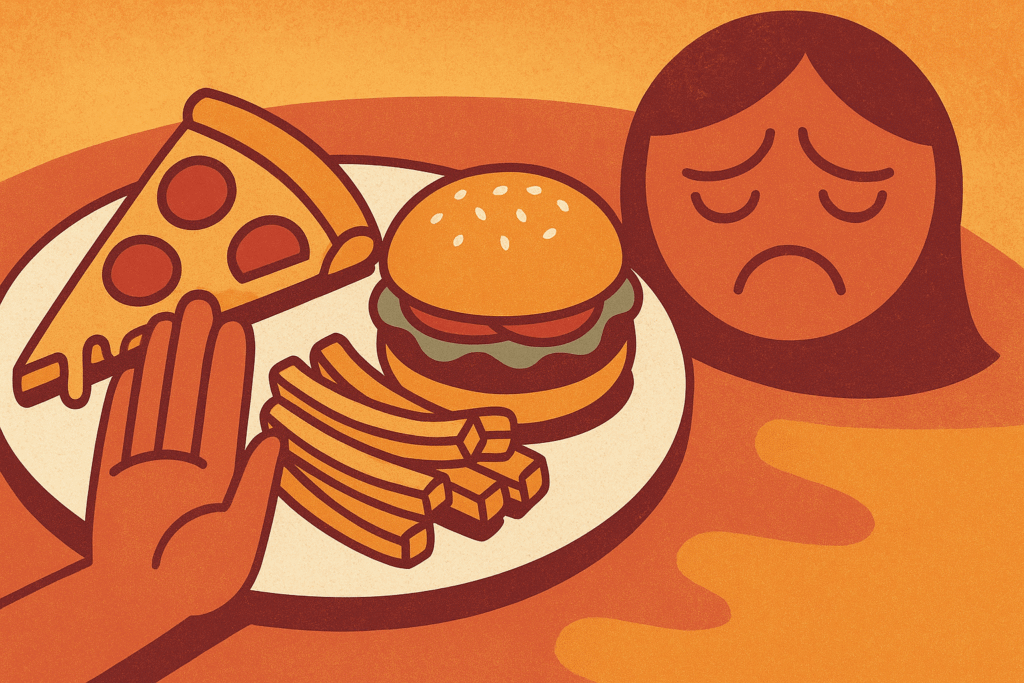
The Problem with “Cheat Meals” and Food Guilt
Many people use cheat meals as part of their diet plan. The idea is to eat clean most of the time and then have one indulgent meal as a reward. It sounds harmless, but this mindset can lead to guilt, overeating, and an unhealthy relationship with food.
Why the Word “Cheat” Creates a Problem
Calling food a cheat instantly labels it as wrong. It turns eating into a moral issue instead of a simple choice. You are not doing something bad by eating dessert or having a slice of pizza. When food becomes “good” or “bad,” guilt often follows, and healthy eating feels like punishment instead of self-care.
Changing how you talk about food helps break this mindset. Instead of calling it a cheat meal, think of it as a flexible or free meal that fits naturally into a balanced diet.
Restriction Leads to Rebound Eating
Strict eating plans often set people up to fail. When you avoid favorite foods for too long, cravings build up. Once you finally allow them, it is easy to overeat. This creates a cycle of restriction followed by guilt and more restriction.
The better strategy is moderation. Include your favorite foods in small portions throughout the week. Over time, you will stop feeling the need to binge when you eat them.
Guilt Does More Damage Than the Food
Food guilt can trigger stress, which affects digestion and mood. It also leads to unhealthy habits, such as skipping meals or exercising excessively to “make up” for eating something. These reactions strain both your body and your mind.
Allow yourself to enjoy food without judgment. A balanced lifestyle includes room for occasional treats. Guilt has no nutritional value, and it often causes more harm than the meal itself.
Focus on Patterns, Not Perfection
Health comes from consistent habits, not single meals. One burger or dessert does not ruin your progress. What matters is the overall pattern of your diet. Eating mostly whole foods, lean proteins, and vegetables will always outweigh the occasional indulgence.
Instead of focusing on what to remove, think about what to add. More fiber, more hydration, and more fresh ingredients improve health naturally.
Final Thoughts
The idea of cheat meals encourages guilt and all-or-nothing thinking. A healthier approach is to enjoy food in moderation without labeling it as good or bad. Consistency matters more than perfection. By letting go of guilt, you build a more balanced, realistic, and enjoyable way to eat for life.