
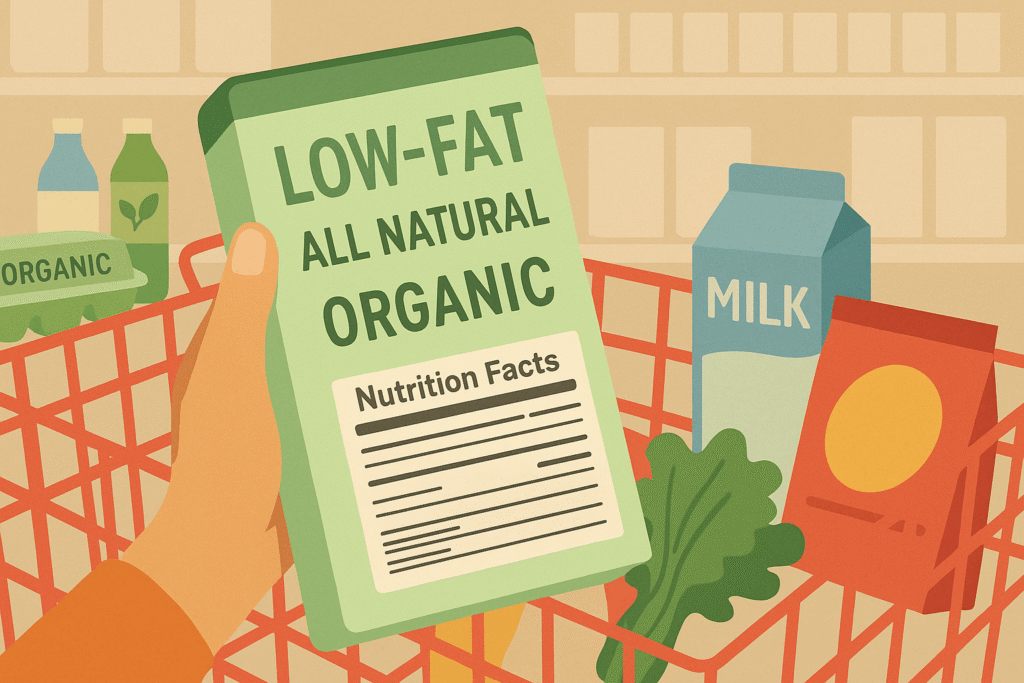
How to Spot Misleading Food Labels
Supermarkets are full of products that look healthy at first glance. Words like “natural,” “low-fat,” and “sugar-free” are printed in bold to make you feel confident about your choice. But many of these labels are designed to persuade, not to inform. Knowing how to read them critically can help you make smarter decisions about what you eat.
Look Past the Buzzwords
Food companies often use vague terms that sound healthy but have no strict legal definition. Labels such as “natural,” “wholesome,” or “made with real ingredients” do not always mean the product is nutritious. Even “organic” does not automatically mean low in sugar, salt, or calories.
Instead of focusing on the front of the package, turn it over and check the ingredients and nutrition facts. That is where the real story is.
Check the Ingredient List
Ingredients are listed in order of quantity, from most to least. If sugar, refined flour, or oil appears near the top, the product is likely high in calories and low in nutrients. Watch out for hidden sugars that appear under names like syrup, maltose, fructose, nectar, or juice concentrate.
Short ingredient lists with simple items such as oats, nuts, and fruit usually indicate less processing. A long list full of additives or preservatives suggests the opposite.
Understand Serving Sizes
Portion sizes on food labels can be misleading. A small package might appear low in calories, but the label may list two or three servings. Always check how many servings the package contains and multiply the numbers if you plan to eat the whole thing.
This matters especially for snacks, cereals, and drinks, where small serving sizes make the nutrition look better than it really is.
Watch for “Low” and “Free” Claims
“Low-fat,” “reduced-sugar,” or “cholesterol-free” claims often hide trade-offs. Removing fat, for example, can make food taste bland, so companies add sugar or starch to compensate. Similarly, “sugar-free” foods often contain artificial sweeteners that affect cravings or digestion.
Always check the full nutrition label to see what was added to replace what was removed.
Pay Attention to Daily Values
The percent daily value (%DV) tells you how much a nutrient contributes to your daily diet. As a general guide, five percent or less of a nutrient per serving is low, and twenty percent or more is high. Use these numbers to balance your intake of sodium, sugar, fiber, and protein.
Final Thoughts
Food packaging is designed to attract attention, not necessarily to tell the truth. Learning to read beyond the marketing helps you understand what you are really buying. Focus on ingredient quality, portion sizes, and the nutrition panel instead of buzzwords. The simpler the label, the easier it is to trust what is inside.