
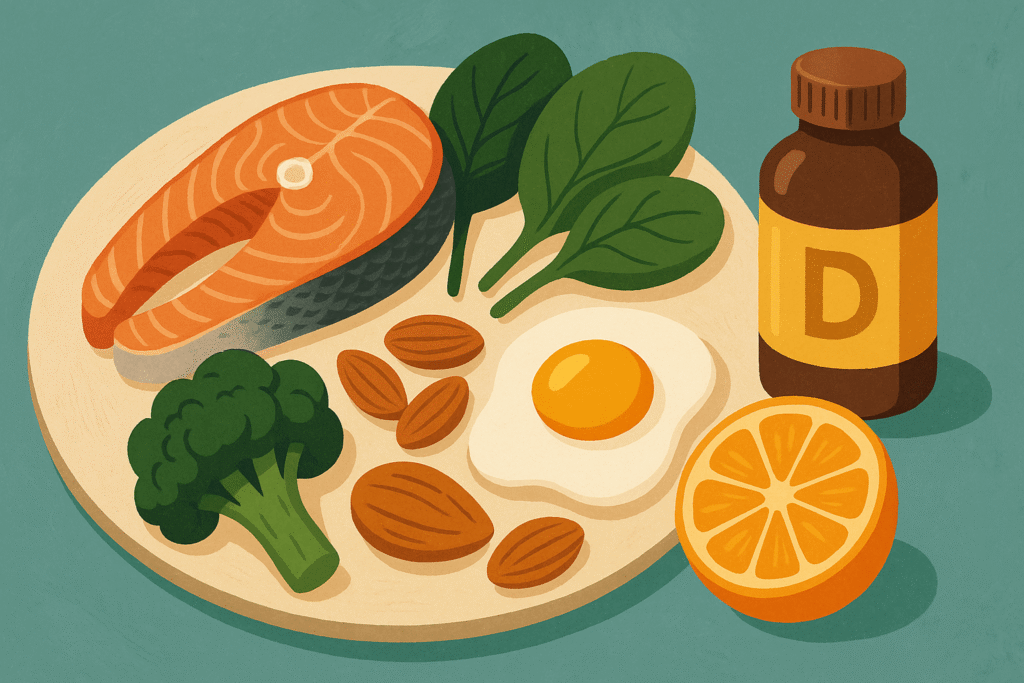
Common Nutrient Deficiencies and How to Spot Them
Even with a balanced diet, it is easy to miss key nutrients that keep your body running well. Modern eating habits, food processing, and busy lifestyles can lead to hidden deficiencies that cause fatigue, poor focus, or changes in skin and hair health. Recognizing the early signs helps you correct them before they affect your long-term health.
Iron
Iron carries oxygen through your blood. Low levels can make you feel weak or tired and may cause pale skin or shortness of breath. Women, vegetarians, and endurance athletes are most at risk.
How to fix it: Eat more iron-rich foods like lean meats, beans, lentils, and leafy greens. Pair these with foods high in vitamin C, such as oranges or capsicum, to improve absorption.
Vitamin D
Vitamin D supports bone health and immune function. Deficiency is common in people who spend little time in sunlight or use heavy sunscreen. Signs include fatigue, muscle weakness, or frequent colds.
How to fix it: Spend short periods in sunlight several times a week, and include foods like fatty fish, eggs, and fortified milk. Some people may benefit from supplements, especially in winter.
Vitamin B12
B12 helps your body make red blood cells and supports brain function. Low levels can cause tiredness, tingling in the hands or feet, and difficulty concentrating. Vegans and vegetarians are at higher risk because B12 is found mainly in animal products.
How to fix it: Include eggs, dairy, or fortified plant-based products. People who avoid animal foods completely may need a B12 supplement.
Magnesium
Magnesium supports muscle function, nerve health, and energy production. Deficiency can cause muscle cramps, poor sleep, and stress sensitivity. It is often low in people who eat processed foods or drink a lot of coffee or alcohol.
How to fix it: Eat more nuts, seeds, spinach, and whole grains. A small supplement before bed may also help with relaxation and recovery.
Calcium
Calcium is essential for strong bones and muscle function. Low intake can increase the risk of osteoporosis over time. Signs include brittle nails, muscle spasms, and tooth sensitivity.
How to fix it: Include dairy, fortified plant milks, tofu, or leafy greens in your diet. Consistent intake is more important than high doses.
Omega-3 Fatty Acids
These healthy fats reduce inflammation and support heart and brain health. A lack of omega-3s can lead to dry skin, poor focus, or joint pain.
How to fix it: Eat salmon, sardines, or flaxseeds regularly. Plant-based eaters can use algae oil supplements for a direct omega-3 source.
Final Thoughts
Most nutrient deficiencies develop slowly, and symptoms can be subtle at first. Paying attention to energy, mood, and physical changes can help you catch them early. A varied diet with plenty of whole foods usually covers your needs, but if you suspect a deficiency, a simple blood test can confirm it. Small dietary adjustments can restore balance and improve overall health.