
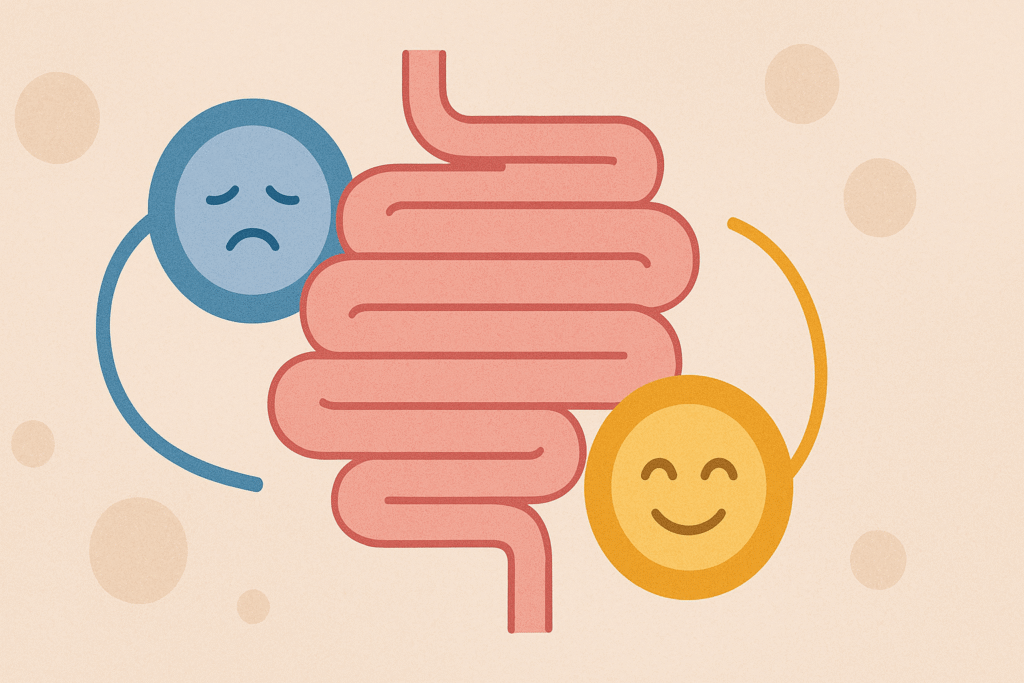
The Link Between Gut Health and Mood
Your gut and your brain are closely connected through a communication network called the gut-brain axis. This system links your digestive system to your nervous system, meaning that what happens in your gut can influence how you feel, think, and manage stress.
How the Gut and Brain Communicate
The gut contains millions of nerve cells that make up the enteric nervous system, often called the second brain. These nerves communicate with the brain through the vagus nerve, sending constant signals about digestion, hunger, and emotional states.
Your gut also produces many of the same chemicals that affect mood. Around 90 percent of serotonin, a hormone linked to happiness and relaxation, is made in the digestive tract. When gut health is poor, serotonin production can be disrupted, affecting emotional balance and mental clarity.
The Role of Gut Bacteria
The gut is home to trillions of bacteria known as the microbiome. These microbes help digest food, regulate immunity, and produce nutrients that support brain function.
A balanced microbiome supports a calm, stable mood, while an imbalance can increase inflammation and affect brain function. Research shows that people with diverse gut bacteria often experience better emotional health, while imbalances are linked to anxiety, depression, and fatigue.
Foods That Support Gut and Mood
A healthy gut begins with the right diet. To nourish your microbiome, focus on:
- High-fiber foods such as fruits, vegetables, beans, and whole grains.
- Fermented foods like yogurt, kefir, sauerkraut, and kimchi that add beneficial bacteria.
- Prebiotics, found in foods like garlic, onions, and bananas, which feed healthy bacteria.
- Omega-3 fats from fish, nuts, and seeds that reduce inflammation.
Avoid highly processed foods, excessive sugar, and alcohol, as they can disrupt gut balance and harm beneficial bacteria.
Lifestyle Habits That Improve Gut Health
Stress, lack of sleep, and inactivity can all harm the gut. Chronic stress alters digestion and changes bacterial balance. Regular movement, mindfulness, and deep breathing can improve gut function and communication with the brain. Getting enough sleep also supports recovery and digestion.
Final Thoughts
Your gut influences your emotions more than you might think. When you care for your digestive system through nutrition, rest, and balanced habits, your mind benefits too. A healthy gut supports clearer thinking, calmer moods, and stronger resilience to daily stress.